

 Travel Guide
Rome isn’t just a city, it’s an open-air museum that has been inspiring travelers for over 2,000 years! Did you know the Colosseum attracts more than 7 million visitors annually? For first-time travelers, navigating Rome’s endless history, culture, and food can feel overwhelming. That’s why I’ve put together this complete Rome tourist guide. From must-see attractions to hidden piazzas and authentic trattorias, this itinerary will help you experience the Eternal City like a local without missing the highlights!
Why Visit Rome? The Eternal City’s Timeless Appeal
The first time I walked through Rome, I remember thinking, This place feels like a movie set that never ends. Every corner had a story, sometimes thousands of years old, sometimes just from the guy selling roasted chestnuts near the Spanish Steps. Rome’s history isn’t locked in museums; it’s literally beneath your feet. I once tripped over an uneven cobblestone and realized it was older than the country I was born in. That’s the kind of perspective Rome gives you, humbling but magical.
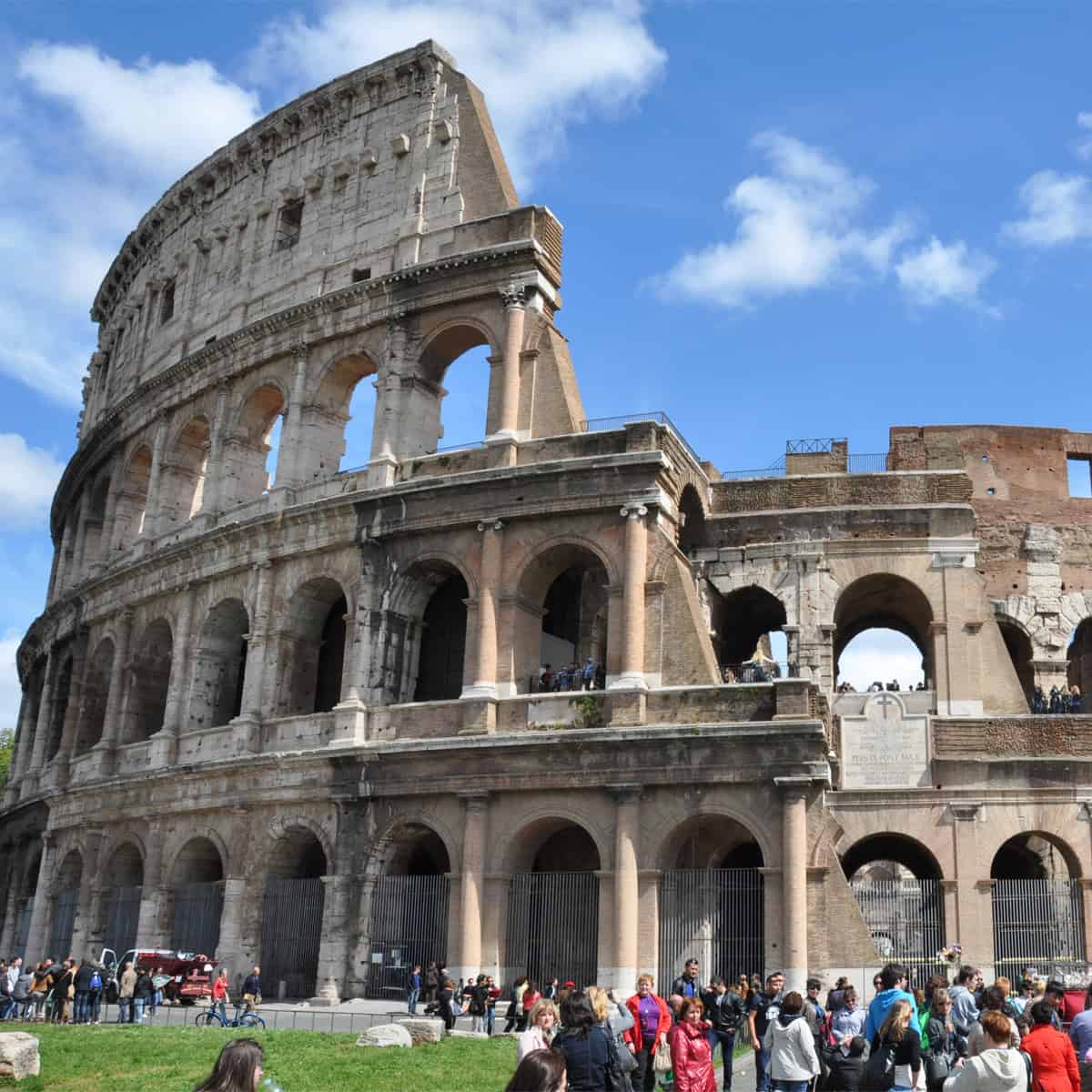
Now, don’t get me wrong, the Eternal City can be overwhelming. The traffic is chaos, and the lines for the Colosseum? Brutal if you don’t book ahead. I learned that the hard way on my first trip, waiting two hours in the heat while smarter tourists breezed past with skip-the-line passes. But once you’re inside, staring at the Colosseum’s arches where gladiators once fought, you forget the hassle. The same goes for the Vatican Museums, packed shoulder to shoulder, but then you look up at the Sistine Chapel ceiling, and honestly, your jaw just hangs there.
What makes Rome special isn’t just the ancient ruins or Renaissance art it’s how they blend with everyday life. You’ll see locals sipping espresso in a piazza framed by fountains sculpted centuries ago. Modern shops sit right next to medieval churches. It’s a weird but beautiful mashup that makes you feel like you’re time-traveling with every step. That’s why, for first-time visitors, Rome isn’t just a stop on the itinerary. It’s the one city where history, culture, and modern life collide in the most unforgettable way.
Essential Travel Tips for First-Time Visitors
If I could go back and give myself advice before my first Rome trip, it would be this: don’t underestimate the weather. I visited in August once a huge mistake. It was 36°C, every gelato shop had a line, and locals had already escaped to the coast. Spring (April–June) and fall (September–October) are perfect. The air is cooler, piazzas are buzzing, and you’ll actually enjoy sitting outside with a plate of cacio e pepe without sweating through your shirt.
Getting around Rome is its own adventure. The metro is cheap and quick, but honestly, it only has three main lines, so it won’t get you everywhere. Buses cover more ground, but they’re often late or crowded. My favorite way to see the city? Walking. You’ll stumble upon hidden fountains, tiny churches, and trattorias you’d never find otherwise. Just wear solid shoes, those cobblestones will chew up flimsy sneakers.
Choosing where to stay can make or break your trip. I stayed in Trastevere once, and it felt like stepping into a postcard, cobblestone alleys, local trattorias, and music spilling out at night. If you want to be in the middle of it all, Centro Storico puts you near major landmarks like the Pantheon. And if Vatican City is high on your list, that area is quieter at night but perfect for early morning visits to St. Peter’s Basilica.
One last batch of tips: don’t stress about the language too much. Most Romans in tourist spots speak enough English to get by, though a simple grazie or buongiorno earns smiles. Watch your wallet on crowded buses and near Trevi Fountain, pickpockets are slick here. And save money where you can: fill your water bottle at the city’s free nasoni fountains, grab espresso at the bar instead of sitting down, and buy Colosseum or Vatican tickets online to skip those painful lines. Trust me, your future self will thank you.
3-Day Rome Itinerary for First-Time Tourists
When I planned my first trip to Rome, I crammed way too much into one day and ended up exhausted, feet blistered, and honestly kind of cranky. Over time, I learned that the best Rome itinerary balances the heavy-hitters with those quieter, magical moments you only stumble into when you’re not rushing. Here’s the three-day plan I wish I had followed from the start.
Day 1: Ancient Rome & City Center
Start early at the Colosseum. Trust me, get skip-the-line tickets or a guided tour, because waiting in the Roman sun for two hours is not how you want to kick off your trip. Once inside, picture the roar of 50,000 spectators; it’s chilling. From there, wander through the Roman Forum and climb Palatine Hill for one of the best views in the city. Later, head toward Piazza Venezia with its massive white monument (Romans joke it looks like a typewriter). Climb Capitoline Hill for a quieter perspective and some stunning statues. By evening, stroll to the Trevi Fountain yes, it’s crowded, but toss in a coin anyway. Finish at the Spanish Steps with gelato in hand; cliché, but magical.
Day 2: Vatican City & Surroundings
This day is all about patience and wonder. I went to St. Peter’s Basilica first thing in the morning, and walking into that vast space gave me goosebumps. Don’t skip climbing the dome, it’s a sweaty climb, but the panoramic view over Rome is worth every step. Then, brace yourself for the Vatican Museums. It’s a maze, but when you reach the Sistine Chapel and crane your neck at Michelangelo’s ceiling, it’ll stop you in your tracks. Afterward, take a slow walk along the Tiber River to Castel Sant’Angelo. By evening, cross over to Trastevere. I had one of the best pasta carbonaras of my life there, sitting outside under twinkle lights while street musicians played.
Day 3: Baroque Rome & Hidden Gems
Your last day is about soaking in Rome’s character. Start at the Pantheon, the way light pours through the oculus is almost spiritual. From there, wander through Piazza Navona with its fountains, then Campo de’ Fiori for lively markets and street vendors. Get lost in hidden piazzas and courtyards; some of my favorite Rome memories come from random turns down quiet alleys. Stop at a family-run gelateria (skip the flashy neon ones) and try pistachio, it’s unreal. End the day at Gianicolo Hill. Watching the sunset over Rome’s rooftops felt like the city was whispering, “You’ll come back.” And honestly, you probably will.
Beyond the Itinerary – Day Trips from Rome
Rome is incredible, but after a few days of ruins and piazzas, I started itching to see what else was nearby. The beauty of the Eternal City is how connected it is. You can hop on a train in the morning, spend the day somewhere completely different, and be back in Rome for a late dinner. I didn’t believe it at first, but after a couple of trips, I realized these day excursions can be just as memorable as the Colosseum itself.
Pompeii & Naples
The day I went to Pompeii, it was scorching hot, and I forgot sunscreen (rookie mistake). Still, wandering through ancient streets frozen in time gave me chills. The plaster casts of people caught in Vesuvius’s eruption hit harder than any history book ever could. On the way back, I stopped in Naples. Forget fancy restaurants just grab a Margherita pizza from a tiny pizzeria. It’s cheap, messy, and so good you’ll rethink every other pizza you’ve eaten.
Florence
Florence feels like Rome’s more polished cousin. I took the high-speed train (about 90 minutes), and suddenly I was standing under Brunelleschi’s Dome and staring at Michelangelo’s David. The city is smaller and walkable, so you can actually breathe a bit. My tip: book Uffizi tickets ahead, or you’ll lose half your day in line. And don’t skip crossing Ponte Vecchio it’s touristy, sure, but there’s something magical about the gold shops glinting in the sun.
Tivoli
If you want something close and less crowded, Tivoli is a gem. Villa d’Este is like stepping into a fairy tale hundreds of fountains, terraced gardens, and views that just don’t seem real. Then there’s Hadrian’s Villa, sprawling and almost haunting. I remember wandering alone through crumbling baths and thinking, “How did one emperor need this much space?” Easy train ride, cheap ticket, and honestly one of the best half-day trips I’ve taken.
Orvieto
This one surprised me the most. It’s perched on a hill in Umbria, and the funicular ride up already feels like an adventure. The cathedral’s striped façade is jaw-dropping, and the underground caves tour is wild, ancient tunnels, olive presses, and even pigeon holes carved into stone. Plus, the local white wine is crisp and pairs perfectly with the countryside vibe. If Rome feels like a whirlwind, Orvieto is where you finally exhale.
Practical Travel Resources & Tools
One of the first lessons I learned in Rome was this: not every attraction needs a guided tour, but some definitely do. I tried doing the Vatican Museums on my own once, and honestly, it felt like wandering a giant maze with no context. The second time, I booked a guided tour, and suddenly the random hallways and tapestries came alive with stories. On the flip side, places like the Pantheon or Piazza Navona? You don’t need anyone holding a flag and talking into a microphone. Sometimes DIY exploration gives you more freedom to linger (or grab a quick gelato break).
When it comes to tickets, Rome has plenty of passes, and I made the mistake of buying the wrong one on my first trip. The Roma Pass is solid if you plan to hit multiple museums and use public transport a lot. The Omnia Card, though, is better if Vatican City is a big deal for you since it bundles in those tickets. My advice? Do the math before you buy. I’ve wasted money on passes that didn’t fit my itinerary, and it stung.
Apps are lifesavers in Rome. Google Maps works, but it can be wonky in narrow alleys. I used Citymapper for buses and metro updates, and it saved me from hopping on the wrong bus more than once. For food, TheFork helped me book trattorias where locals actually eat, and I used Google Translate more than I’d like to admit when deciphering menus.
Packing for Rome is trickier than you’d think. The cobblestones will destroy flimsy shoes, so invest in a solid pair of walking sneakers. Bring a reusable water bottle. Rome’s nasoni fountains give you free, cold drinking water everywhere. And don’t forget a light scarf or shawl; I once got turned away from St. Peter’s because my shoulders weren’t covered. Lesson learned the hard way. A portable phone charger is another must. Between photos, maps, and translation apps, your battery will vanish faster than you expect.
Conclusion
Rome is more than just a destination it’s a journey through time, culture, and flavor. With this complete itinerary, first-time visitors can experience both the world-famous landmarks and the authentic side streets that make Rome unforgettable. So pack your bags, brush up on a few Italian phrases, and get ready to fall in love with the Eternal City! Ready to explore Rome like a pro? Start planning your trip today.


Skapa Ett Gratis Konto
January 30, 2026 - 12:34 amYour article helped me a lot, is there any more related content? Thanks!
бнанс створення акаунту
February 5, 2026 - 10:10 amYour point of view caught my eye and was very interesting. Thanks. I have a question for you.
Conta Aberta Na Binance
February 24, 2026 - 12:22 pmCan you be more specific about the content of your article? After reading it, I still have some doubts. Hope you can help me.
Www.binance.info рестраця
February 25, 2026 - 6:10 amI don't think the title of your article matches the content lol. Just kidding, mainly because I had some doubts after reading the article.
ファイルコイン価格
February 26, 2026 - 5:20 amReading your article helped me a lot and I agree with you. But I still have some doubts, can you clarify for me? I'll keep an eye out for your answers.
最佳Binance推荐代码
February 26, 2026 - 8:00 amYour point of view caught my eye and was very interesting. Thanks. I have a question for you.
Ouvrir Un Compte Binance
March 1, 2026 - 2:23 amYour article helped me a lot, is there any more related content? Thanks!
Binance Us Register
March 18, 2026 - 4:46 amYour point of view caught my eye and was very interesting. Thanks. I have a question for you.
Bonus De Parrainage Binance
March 29, 2026 - 1:25 amI don't think the title of your article matches the content lol. Just kidding, mainly because I had some doubts after reading the article. https://www.binance.com/register?ref=QCGZMHR6